Settled vs Atticus for estate settlement
Settled vs Atticus is a choice between self-directed software and a higher-touch service. Settled Estate costs $19.99 once per estate in 50 current states and D.C. Atticus advertises software, a forms library, and weekday Estate Expert support, while its page shows $499 and plans from $175. Settled price checked October 1, 2026; Atticus page checked September 9, 2026.
Free preview and 10 assistant questions. Working tools cost $19.99 once per estate. See what is included.
By Settled Estate Editorial Team · Checked
Choose Settled when you want to organize one estate yourself at a low one-time software price. Consider Atticus when access to a person and help finding or preparing forms may justify a larger, quote-sensitive purchase. Ask Atticus exactly what the quoted plan includes before comparing cost.
What we checked. We inspected Settled code and focused tests. We checked Atticus public family product and pricing content on September 9, 2026. We did not submit its intake, buy a plan, speak with an Estate Expert, or map its unclear public price figures to tiers.
Is Atticus software, a service, or both?
Atticus presents a blended offer. Its family page describes a questionnaire, individualized steps, estate and beneficiary records, document storage, a library of more than 5,250 local forms, form recommendations and autofill, electronic or requested physical document delivery, and live Estate Experts. The company states that its team works weekday hours from 8 a.m. Eastern to 5 p.m. Pacific. Read Atticus's family offer.
Settled is a self-directed workspace. It supports estate tasks, assets, heirs, contacts, files, transaction imports, expenses, reimbursements, distributions, calculations, reminders, collaborators, and exports. It provides general information and source navigation. It does not promise a human estate specialist who will review the user's questions or help select a form. Read Settled's product description.
Scroll across to compare all columns.
| Decision point | Settled | Atticus |
|---|---|---|
| Product shape | Self-directed estate workspace | Software and forms tools paired with live Estate Expert support |
| Published price | $19.99 once per estate | Family page shows $499 and “plans starting at $175”; exact tier mapping is unclear |
| Human help | Product and customer support; no promised personal estate specialist | Live Estate Experts during stated weekday hours |
| Records | Assets, heirs, contacts, tasks, documents, transactions, expenses, distributions, and exports | Vendor describes estate assets, beneficiaries, documents, records, reports, and forms |
| Geography | 50 published states and D.C. | Vendor says it is available nationally in the United States and Canada |
| Evidence used here | Code, focused tests, and public product page | Public family page only; no plan purchase or advisor conversation |
What does Atticus cost compared with Settled?
Settled publishes one current complete-workspace price: $19.99 once per estate. Atticus's family page places “$499” next to its product and adds “plans starting at $175.” The same public section does not state which plan costs $175, which costs $499, how long access lasts, or which forms and human-help features belong to each price. Check the current Atticus page.
That ambiguity prevents a responsible dollar-for-dollar tier table. It would be misleading to assign Atticus features to either amount without an exact quote. A buyer should request the plan name, full price, access term, included Estate Expert contact, form preparation scope, document delivery, refund terms, cancellation terms, and any later charge in writing.
If the applicable Atticus price is $175, the difference from Settled is $155.01. If it is $499, the difference is $479.01. These are arithmetic comparisons to the two public figures, not claims about which tier a reader will receive. Human support may justify that gap for a person who would otherwise stall, choose the wrong form set, or repeatedly hire professional time for administrative questions.
A service fee may be an estate expense in some circumstances, but Atticus's reimbursement statement does not decide the issue for a particular executor. Authority, reasonableness, the will, state law, and court review can matter. Keep the agreement and receipt, and ask counsel or the court about uncertain treatment.
When is Atticus human support worth considering?
Human help has value when the executor understands the broad task but cannot translate it into the next administrative action. A person may help identify which intake fact is missing, explain what a form requests, locate a local version, arrange a physical copy, or tell the user when the question needs a lawyer. Atticus expressly makes people part of its offer.
Ask about the boundary. “Estate Expert” does not by itself mean lawyer, accountant, fiduciary, court clerk, or representative. Before paying, ask whether the person can interpret a will, recommend a legal position, advise about a contested claim, review a tax return, or contact a court or bank for you. Ask whether support is scheduled, message-based, capped, tied to a plan, or available to every collaborator.
Settled serves a different need. It helps a person keep tasks and evidence organized between calls with courts, banks, professionals, and family members. A self-directed user may prefer to spend $19.99 on the workspace and reserve professional fees for legal or tax questions. Someone who is stuck on ordinary forms and process may prefer Atticus even if the software records overlap.
Test the choice with three realistic questions before buying: Which local petition applies? How do I record a house sold above its inventory value? What can my sibling see? Ask Atticus which questions its team answers and ask Settled what the workspace records. The answers reveal whether the purchase is mainly for information, administration, accounting, sharing, or a human relationship.
How do forms, records, and outputs compare?
Atticus advertises a large form library, recommendations, autofill, electronic delivery, and physical copies on request. That can help when finding the correct current local form is the obstacle. The number of forms does not establish that the selected form fits a matter or that a completed form is legally sufficient. Courts can revise forms, require local attachments, or reject incomplete submissions.
Settled has a document workspace and paid downloadable PDF summaries beside the estate record. Those summaries include a verification disclaimer and should be treated as organized working records, not jurisdiction-approved filings. Users can download their entered estate data as CSV or JSON without payment; paid exports add the full generated task descriptions, deadlines, and citations. Its documents and contacts remain connected to the broader workspace.
For accounting, Settled has clearer evidence in this review. It tracks transactions, expenses, reimbursements, gains and losses, cash, held property, and distributions, with CSV or pasted import. Atticus describes assets, beneficiaries, estate records, reports, and help. Its public family page does not give enough field-level detail to compare its accounting with Settled.
Before paying Atticus, ask to see the output for a fictional estate with a home sale, reimbursement, debt payment, and partial distribution. Ask whether the form or report remains editable, who checks it, what source date applies, and what happens if the court requests a change. Before paying Settled, confirm the state is available and that its import and report path fits the same facts.
Fair reasons to choose Settled vs Atticus
Our rubric compares task guidance, estate records, money work, sharing, help, and the full price. We avoid a numerical ranking because Atticus has not received a paid, hands-on test and its public tier mapping is unclear. This evidence boundary follows Google's review guidance.
Reasons to choose Settled
- The $19.99 one-time price is much lower than either public Atticus figure.
- It has a concrete financial-record and file-import workflow.
- It joins tasks, estate data, documents, collaborators, and reports without selling a support service.
- It can suit a self-directed executor who already has legal or tax help where needed.
Settled limitations
- It does not promise access to a live Estate Expert.
- Coverage is currently limited to 50 published states and D.C.
- It has no live bank feed, and collaborators can edit estate information.
- Its summaries and product guidance do not amount to legal review or court approval.
Reasons to choose Atticus
- Live human help is part of the product description.
- Its public offer includes form finding, recommendations, autofill, and physical document help.
- It says the consumer product is available across the United States and Canada.
- A blended service may suit someone who needs recurring explanations more than detailed self-service accounting.
Atticus limitations
- The public price presentation does not clearly map $175 and $499 to exact plans.
- Live team hours are weekdays during a stated time window, not around the clock.
- The public page does not establish the legal credentials or advice scope of every Estate Expert.
- Its accounting and permission details are less specific than needed for a direct feature match from public evidence.
Who should choose Settled or Atticus?
Choose Settled when you can manage the process yourself, the estate lies within current coverage, and you want a low-cost workspace for records and work. Inspect the full executor workspace and the money workflow before purchase.
Consider Atticus when human help with forms and administrative steps could be the difference between moving and remaining stuck. Get a written quote that names the plan and every included service. Confirm when a question is routed to a lawyer, accountant, or other licensed professional.
A contested will, disputed appointment, unclear ownership, insolvency, tax exposure, fiduciary dispute, or urgent filing may require counsel regardless of product. Neither a workspace nor an Estate Expert label guarantees legal representation.
Ask Atticus to describe one complete support exchange before buying: how the user submits a question, who reviews it, how quickly the team usually responds, whether contact is capped, and what written record remains. Ask whether a form recommendation includes only the blank form, autofilled fields, a completeness check, or filing help. Those distinctions explain the price better than a list of form and support labels.
See the working tools
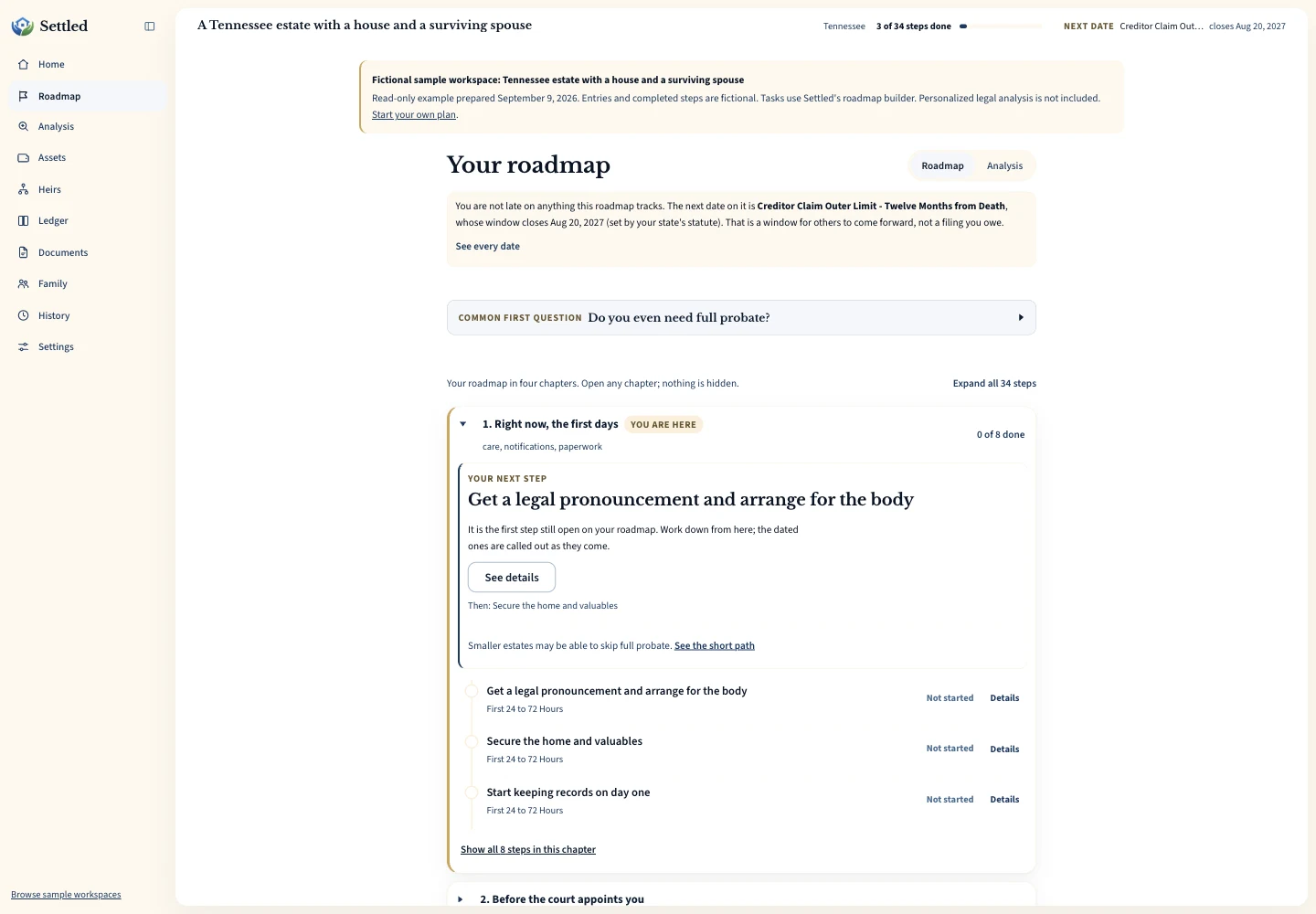
Inspect the same fictional records as a PDF summary, CSV ledger or data export.
Frequently Asked Questions
How much does Atticus cost?
Is an Atticus Estate Expert a lawyer?
Does Settled provide human estate guidance?
Which option is better for forms?
Did Settled speak with an Atticus advisor for this review?
Keep working through your options
See how Settled organizes tasks, records, money, documents, and shared work.
Review methodologyRead how we check product claims and handle our interest in Settled.
Executor software choicesCompare the main options by the work an estate requires.
Estate settlement helpCompare software, concierge help, and professional services.
Sources and checking dates
Product pages can change between checks. Confirm the price, included features and terms on the provider’s site before paying.
- The Settled Workspace. Settled Estate. Publication date not stated. Checked 2026-10-01.
- Probate and Estate Settlement for Families. Atticus. Publication date not stated. Checked 2026-09-09.
- Write high quality reviews. Google Search Central. Published Updated 2025-12-10. Checked 2026-09-09.
Settled Estate is not a law firm, and this content is for informational purposes only and does not constitute legal advice. Probate laws and procedures in your state can change. Consult with a qualified attorney for advice specific to your situation. Full disclaimer.